As an Amazon Associate, I earn from qualifying purchases.
To make comfrey fertilizer, cut fresh comfrey leaves, place them in a covered bucket, add water until the leaves are submerged, and let the mix break down for about two to four weeks in warm weather. Strain the dark liquid and dilute it with water before feeding your plants.
In American home gardens, homemade plant food can help you care for tomatoes, peppers, squash, berries, and other crops without buying a new bottle of liquid fertilizer each time. Comfrey is a leafy perennial that can provide useful plant nutrients. Its leaves break down into a liquid feed that gardeners can use during the growing season.
The process is simple, but the result needs care. Homemade comfrey fertilizer does not have a fixed nutrient strength, and the liquid can smell strong while it breaks down. A covered bucket, a safe place to keep it, and a sensible dilution rate will make the job easier. This guide explains the materials, steps, timing, and common mistakes so you can make and use the feed with confidence.
Comfrey fertilizer is a homemade plant feed made from the leaves of comfrey plants. Gardeners usually soak the leaves in water until they soften and break down. The resulting liquid contains some of the nutrients released from the plant material.
Comfrey is valued for its potassium content, along with nitrogen, phosphorus, and other minerals. Potassium helps plants manage water, supports normal enzyme activity, and plays a role in flower and fruit development. Nitrogen supports leafy growth, while phosphorus helps with energy transfer and root development.
The amount of each nutrient in homemade comfrey fertilizer is not fixed. It depends on the plant variety, growing conditions, leaf age, amount of water, and preparation method. Without a laboratory test, you cannot know the exact nutrient analysis of a homemade batch.
Comfrey fertilizer is often called comfrey tea, although it is not a drink. The liquid is intended for garden use and should never be consumed. Its strong smell can be unpleasant, but that smell is common during the breakdown of plant material.
Source: myheartliveshere.com
A useful source of nutrients
Comfrey leaves can return plant nutrients to the garden in liquid form. The feed is most useful as one part of a broader soil care plan.
A low-cost garden resource
If comfrey already grows in your garden, you can harvest its leaves and reuse them instead of buying a separate feed for every application.
Not a complete fertilizer by default
Homemade comfrey liquid has no guaranteed nutrient ratio. Use a soil test and crop needs to decide whether extra nutrients are required.
Which Plants Benefit From Comfrey Feed?
Tomatoes, peppers, eggplants, squash, cucumbers, and other fruiting crops are common choices for comfrey feed. Gardeners also use it on established flowering plants and some fruit crops. These plants may benefit from an extra nutrient supply when they are actively growing and forming flowers or fruit.
Do not assume that every plant needs extra fertilizer. Seedlings, newly transplanted plants, and crops growing in rich soil may need little or no additional feed. Too much fertilizer can harm roots or encourage unwanted growth.
Vegetable beds
Use a diluted feed for established fruiting crops when their growth and soil conditions suggest that extra nutrients may help.
Container plants
Use a weaker starting mix and apply sparingly because a pot contains less soil to buffer changes in nutrient concentration.
Young seedlings
Avoid strong homemade feeds. Young roots are sensitive, and seedlings may already receive nutrients from their potting mix.
What You Need to Make Comfrey Fertilizer
Gather your tools before cutting the leaves. You do not need special equipment, but a suitable container and a safe place to keep it will make the process cleaner and easier to manage.
Choose a sturdy plastic bucket or another container intended for this kind of use. A lid helps contain the smell and keeps rain, debris, and animals out. Do not use a container that previously held pesticides, solvents, fuel, or other hazardous chemicals.
Comfrey stems have stiff hairs that can irritate the skin. Wear gardening gloves and use clean shears or garden scissors when harvesting. Keep a separate stirring stick and strainer for garden fertilizer, and label the container clearly.
Source: epicgardening.com
Fresh comfrey leaves
Collect healthy leaves from a well-established plant. Avoid leaves contaminated with pesticides, animal waste, or other pollutants.
A covered bucket
Use a sturdy, nonreactive container with enough room for leaves and water. A five-gallon bucket works for a small home garden.
Clean water
Use ordinary clean water suitable for garden use. Add enough to cover the leaves fully.
Gloves and cutting tools
Protect your hands and cut the leaves cleanly. Wash the tools after use and keep them separate from kitchen equipment.
A strainer and storage bottle
Use a dedicated strainer to remove plant pieces and a clearly labeled bottle or container to store the finished liquid.
Which Comfrey Should You Use?
Several comfrey types can be used for homemade fertilizer. Russian comfrey, Symphytum x uplandicum, is popular among gardeners. The Bocking 14 cultivar is especially valued because it produces useful foliage and rarely sets viable seed.
Common comfrey can spread by seed, and comfrey plants may also regrow from root fragments. Before planting or moving comfrey, check local guidance on its growth and spread. If you do not have a suitable plant, obtain one from a responsible nursery rather than digging up wild plants.
Harvest established plants
Take leaves from healthy plants that have enough growth to recover after cutting.
Control unwanted spread
Avoid scattering root fragments and prevent seed-producing plants from spreading into unwanted areas.
How to Make Comfrey Fertilizer With Water
The water-steeping method is a practical starting point for most home gardeners. It uses fresh leaves, water, and time. The liquid forms as the leaves soften and decompose, releasing some of their nutrients into the water.
For a manageable first batch, use a five-gallon bucket. Add enough chopped leaves to fill it loosely or pack them down gently, then add water until the leaves are submerged. There is no need to measure the leaves with extreme precision, but record what you use if you want to repeat a batch.
Source: homesteadhow-to.com
Step 1: Harvest the leaves
Put on gloves and cut healthy leaves from an established comfrey plant. Leave enough growth at the base for the plant to recover.
Step 2: Chop or crush the leaves
Cut the leaves into smaller pieces to help them settle into the bucket. This is optional, but it can make packing and breakdown easier.
Step 3: Fill the container
Place the leaves in the bucket and press them down. Leave some space at the top so the liquid does not spill when you stir or move the container.
Step 4: Add water
Pour in enough water to cover the leaves. Weigh them down with a clean, nonreactive object if they float to the surface.
Step 5: Cover the bucket
Fit a lid that helps contain odors and keeps pests and debris out. Do not seal an actively fermenting container in a way that allows pressure to build.
Step 6: Let the leaves break down
Place the bucket in a secure, shaded outdoor spot. Allow about two to four weeks in warm weather, checking the batch as it develops.
Step 7: Strain the liquid
When the leaves have broken down and the liquid is dark, strain it into a labeled storage container. Put the remaining plant matter in a managed compost pile if appropriate.
How Long Does Comfrey Fertilizer Take to Make?
In warm weather, a water-based comfrey feed often takes about two to four weeks to develop. Cooler weather slows decomposition, so a batch started in early spring may take longer. The calendar is a guide, not a guarantee.
Look for a dark brown liquid and leaves that have softened and broken down. The liquid often has a strong, unpleasant odor. These signs suggest that decomposition has progressed, but they do not prove a specific nutrient concentration or guarantee that the mixture is free of harmful microbes.
If most leaves remain firm and recognizable, give the batch more time. Keep the container covered and check it periodically. Do not add the liquid to plants simply because the expected number of days has passed.
Warm conditions
Breakdown is usually faster when temperatures support active microbial activity.
Cool conditions
Expect a longer waiting period when temperatures are low or change often.
A strong odor
A pungent smell is common, but smell alone cannot establish fertilizer strength or product safety.
How to Make Concentrated Comfrey Fertilizer Without Water
You can also make comfrey concentrate by allowing the leaves to break down without adding water. This method takes advantage of moisture already present in the foliage. The liquid that drains out is often darker and more concentrated than a water-steeped batch, but its nutrient strength can vary widely.
Use two sturdy containers that can be kept securely in place. The upper container must have drainage holes and sit over a lower container that catches the liquid. Pack the upper container with chopped comfrey leaves, add a suitable weight to press them down, and cover the setup to keep out rain and debris.
Leave the leaves to decompose over several weeks. Check the collecting container from time to time and transfer the liquid to a labeled storage bottle. Keep the setup away from walkways, children, pets, and areas where spills could contaminate drains or waterways.
Source: YouTube
Advantages
This method does not require extra water and can produce a compact liquid that is easy to store.
Limitations
The concentrate may vary greatly in strength depending on leaf moisture, packing, drainage, and the time allowed for breakdown.
Dilution
Start with a cautious dilution, such as one part concentrate to fifteen parts water, and use a weaker mixture if the batch is unusually dark or its strength is unknown.
Which Method Is Better for Beginners?
The water-steeping method is generally easier for a first batch because it starts with a known volume of water and is simple to repeat. The concentrate method can save space, but its final strength is less predictable.
Neither method produces a standardized commercial fertilizer. If you need precise nutrient levels for a high-value crop or a sensitive growing system, use a tested fertilizer with a stated analysis instead of relying on homemade concentrate.
Choose water steeping
Use this method when you want a simple process and an easy starting point for dilution.
Choose the concentrate method
Use it when you want to collect a smaller volume of liquid and can handle variable strength with care.
How to Dilute and Apply Comfrey Fertilizer
Dilute homemade comfrey liquid before applying it to garden soil. A practical starting ratio for a water-steeped batch is one part finished liquid to ten parts water. This is a general gardening guideline, not a laboratory-verified rate, because batches can differ in strength.
For example, mix one cup of finished comfrey liquid with ten cups of water. If you use one quart of finished liquid, add ten quarts of water. The result should be a much lighter liquid than the concentrate, but color is only a rough guide and cannot confirm nutrient levels.
Water the soil around the base of the plant rather than soaking edible leaves. Apply the feed to soil that is already moist, since adding concentrated liquid to very dry soil can increase the risk of root stress. Avoid applying it just before heavy rain, which may wash nutrients away.
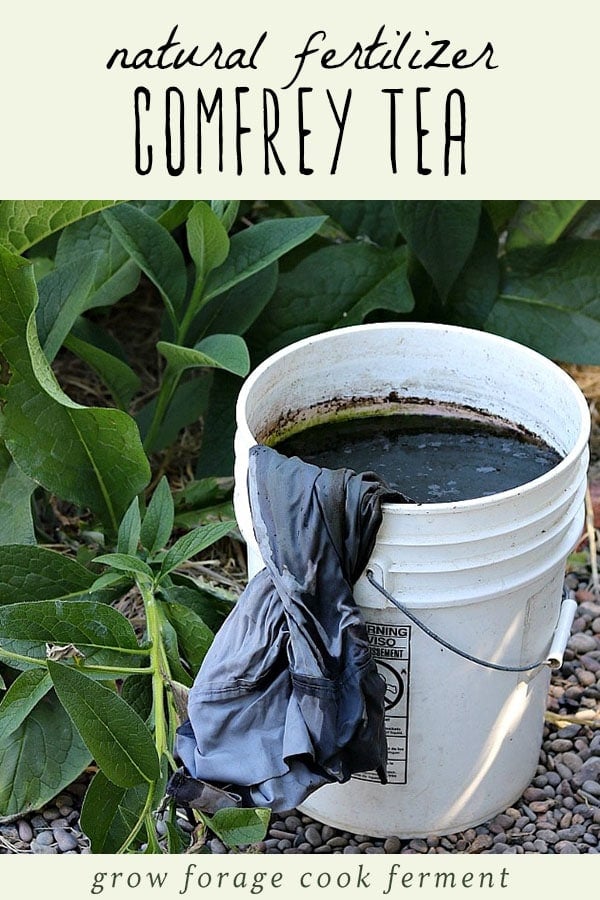
Source: growforagecookferment.com
Start with a gentle mix
Begin with one part liquid to ten parts water. Use more water if the batch is especially dark or if you are feeding plants in containers.
Feed established plants
Apply sparingly to healthy, actively growing plants when additional nutrients may be useful.
Keep the liquid off edible parts
Direct the diluted feed toward the soil, not the leaves, fruit, or vegetables that you plan to eat.
Watch the plant response
If growth appears stressed after feeding, stop applications and water the soil with clean water if drainage allows.
How Often Should You Feed Plants?
There is no single feeding schedule that suits every garden. Soil fertility, plant type, weather, container size, and other fertilizer applications all affect how often a plant needs nutrients.
For an initial trial, apply a diluted feed to a small group of established plants and wait to assess their response before repeating it. Avoid applying it automatically every week if the plants are growing well or if the soil already contains enough nutrients.
If a soil test identifies a specific deficiency, follow the test recommendations. Comfrey liquid can supplement a feeding plan, but it should not replace a measured nutrient source when a crop needs a known amount of a particular element.
Flowering and fruiting crops
Consider a modest application when these plants are actively growing, provided the soil and crop need additional nutrients.
Leafy crops
Do not assume that comfrey alone supplies all the nitrogen needed for vigorous leaf growth.
Plants in pots
Use less feed and monitor carefully because nutrients can build up in a limited volume of potting mix.
Other Ways to Use Comfrey in the Garden
You do not have to turn every comfrey harvest into liquid fertilizer. Fresh leaves can also serve as a mulch, and plant material can go into a managed compost pile. These methods return organic matter and nutrients to the garden without requiring a bucket of fermenting liquid.
Choose the method that suits the crop and the amount of foliage available. Liquid feed is useful when you want to apply a diluted nutrient source around growing plants. Mulch and compost are better when your goal includes returning plant material to the soil.
Source: www.pinterest.com
Comfrey mulch
Lay chopped leaves on the soil surface around established plants, leaving a gap around stems and crowns. Let the leaves break down in place.
Compost ingredient
Mix comfrey leaves with other plant materials in a managed compost pile. Balance wet, soft greens with dry, carbon-rich materials to help the pile break down.
Direct soil use
Small amounts of chopped leaves can be buried in suitable planting areas, provided they will not disturb roots or cause problems in the growing space.
Can You Use Comfrey With Other Homemade Feeds?
Some gardeners combine comfrey with nettle leaves or other green plant material. Nettle-based feeds are often used when leafy growth is the main goal, while comfrey is valued for its potassium contribution. However, the nutrient content of either mixture remains variable.
If you combine ingredients, label the container and record what went into it. Do not assume that mixing two homemade feeds creates a balanced fertilizer. For crops with specific nutrient needs, a soil test and a fertilizer with a known analysis provide a more reliable basis for decisions.
Keep batches identifiable
Record the ingredients and preparation date so you know what you are applying.
Avoid excessive feeding
Adding more ingredients does not automatically improve the feed and may increase the risk of overfertilization.
Common Mistakes and Troubleshooting
Most problems with homemade comfrey fertilizer come from poor handling, uncertain strength, or unsuitable timing. A little care before and after fermentation can prevent spills, reduce odor problems, and lower the chance of harming plants.
Check the container, the condition of the leaves, and the plant’s needs before using a batch. If the process does not seem to be working, give the mixture more time or discard it responsibly rather than trying to fix every problem by adding more water or plant material.
Source: www.pinterest.com
The leaves have not broken down
Cool temperatures may be slowing decomposition. Keep the container covered and wait longer, checking it periodically.
The odor is too strong
A strong smell is common. Keep the bucket outdoors in a secure location away from doors, windows, and seating areas, and keep the lid in place.
Plants look stressed after feeding
Stop feeding. If the soil drains well, water with clean water to help dilute remaining nutrients. Check for other causes, such as heat, pests, disease, or poor drainage.
The liquid is unusually thick
Strain out plant debris and dilute the liquid cautiously. If its condition is concerning or the batch may have been contaminated, do not use it on edible crops.
The bucket attracts pests
Secure the cover, clean spills promptly, and move the container away from food preparation areas and animal access.
How to Store Finished Comfrey Fertilizer
Store finished liquid in a clean, clearly labeled container with a secure lid. Keep it in a cool, shaded, well-ventilated outdoor storage area, away from children, pets, food, drinking water, and storm drains.
Homemade fertilizer has no universal shelf life. Its stability depends on the ingredients, preparation, storage conditions, and microbial activity. For that reason, make a quantity you can use during the growing season and avoid keeping an untested batch for long periods.
Never store the liquid in a drink bottle that could be mistaken for something safe to consume. Do not place it in a refrigerator used for food. Clean equipment after use, and wash your hands even if you wore gloves.
Label the container
Write COMFREY FERTILIZER, the preparation date, and a warning that the contents are not for consumption.
Prevent leaks
Use a stable container and a secondary tray or tub if a spill could reach soil, drains, or a water source.
Dispose of unwanted liquid carefully
Do not pour concentrated fertilizer into storm drains, streams, ponds, or other waterways. Follow local waste guidance if a batch is contaminated or cannot be used responsibly.
Safety and Environmental Considerations
Comfrey is a useful garden plant, but harvesting and preparing it still require care. The stiff hairs on its stems and leaves can irritate the skin, so gloves and long sleeves are sensible choices. Wash exposed skin with soap and water after handling the plant.
Keep homemade fertilizer away from food, drinking water, wells, and natural waterways. Do not apply it where runoff could carry nutrients into a pond or stream. Excess nutrients can contribute to water pollution, so more fertilizer is not always better.
Comfrey can also be difficult to control once established. Some types spread by seed, and pieces of root can produce new plants. Choose a suitable cultivar, prevent unwanted seed spread, and avoid moving root fragments into new areas. Check local rules and invasive plant guidance before growing it.
Do not use homemade comfrey fertilizer as a human or animal remedy. It is a garden preparation, not a food or medicine. If the liquid gets into the eyes, rinse with clean running water, and seek medical advice if irritation continues or a significant exposure occurs.
Source: ruralsprout.com
Protect your skin
Wear gloves while harvesting and handling leaves, and wash tools and hands after the task.
Protect waterways
Use only the amount the garden needs and keep concentrated liquid away from drains, ponds, streams, and wells.
Prevent plant spread
Keep root fragments contained and select a suitable variety for your garden.
Keep it away from people and pets
Label all containers clearly and store the liquid where children and animals cannot reach it.
Should Comfrey Fertilizer Replace Commercial Fertilizer?
Not in every situation. Homemade comfrey feed can supplement a garden feeding plan, but it cannot guarantee the nutrient levels listed on a commercial fertilizer label. It may not supply enough of a nutrient that a soil test identifies as deficient.
For ordinary home gardening, use comfrey alongside sound soil care, such as adding mature compost when appropriate, maintaining soil structure, and watering well. When crop performance or a soil test points to a specific need, choose a fertilizer that supplies the required nutrients at a known rate.
Use comfrey as a supplement
Treat the liquid as one possible source of nutrients rather than a complete feeding program.
Use a soil test when needed
Testing helps identify nutrient shortages and reduces the risk of adding nutrients that the soil does not need.
Frequently Asked Questions
Q
Can I make comfrey fertilizer without adding water?
Yes. Pack fresh comfrey leaves into a container with drainage holes and collect the liquid that forms as the leaves break down. This method can produce a strong concentrate, so dilute it cautiously before use. The final strength varies with the moisture in the leaves and the preparation method.
Q
How long does homemade comfrey fertilizer last?
There is no fixed shelf life for homemade comfrey fertilizer. Storage temperature, container cleanliness, and the state of decomposition all affect how it changes over time. Make manageable batches, keep the liquid in a labeled covered container, and avoid relying on old or contaminated liquid for edible crops.
Q
Can I use comfrey fertilizer on tomato plants?
Yes, diluted comfrey fertilizer is commonly used on established tomato plants when they are actively growing and forming flowers or fruit. Start with one part finished liquid to ten parts water, apply it to moist soil, and monitor the plants. It should supplement rather than replace the balanced nutrition tomatoes may need.
Q
Why does comfrey fertilizer smell so bad?
The smell comes from the breakdown of plant material and the compounds released during decomposition. A strong odor is common in this type of homemade feed. Keep the container covered and store it outdoors in a secure location away from windows, doors, pets, and seating areas.
Q
Can I use comfrey fertilizer on all plants?
Not every plant needs extra fertilizer, and some plants can be harmed by excessive nutrients. Established fruiting crops are common candidates, but seedlings, newly transplanted plants, and plants in small containers need extra care. Consider soil conditions and plant needs before feeding.
Q
Can I make comfrey fertilizer in a small garden?
Yes. A small bucket and a handful of healthy comfrey leaves are enough to make a small batch. Use a covered container, allow time for the leaves to break down, and dilute the finished liquid before applying it. If you do not grow comfrey, consider whether it is suitable for your garden before planting it, because some types can spread.
✦ Wrapping Up
Conclusion
Making comfrey fertilizer is a simple way to reuse garden foliage and produce a homemade liquid feed. Cut healthy leaves, cover them with water in a suitable bucket, allow them to break down, and strain the finished liquid. In warm conditions, the process often takes about two to four weeks, but cooler weather can extend that time.
Dilution and careful use matter as much as the recipe. Begin with one part liquid to ten parts water, apply it to moist soil around established plants, and watch how they respond. Remember that the nutrient strength is variable, so comfrey fertilizer works best as a supplement to good soil care rather than a guaranteed replacement for a complete fertilizer.
💡 Key Takeaway
Start with one small, labeled bucket of comfrey leaves and water. Let it break down in a covered outdoor spot, strain the liquid, dilute it cautiously, and test it on a few established plants before using it more widely.
I enjoy sharing simple gardening ideas, lawn care tips, and honest product reviews that help make outdoor work easier. From home gardening guides to helpful tools and lawn care advice, I write easy-to-follow content to help readers create a healthier and better-looking outdoor space without wasting time or money.